Gemini hits 1 Billion and counting: what this means for performance marketers.
Gemini has hit 1 billion users - but beyond the numbers, what does this mean for marketing leaders? Mike Sharp…
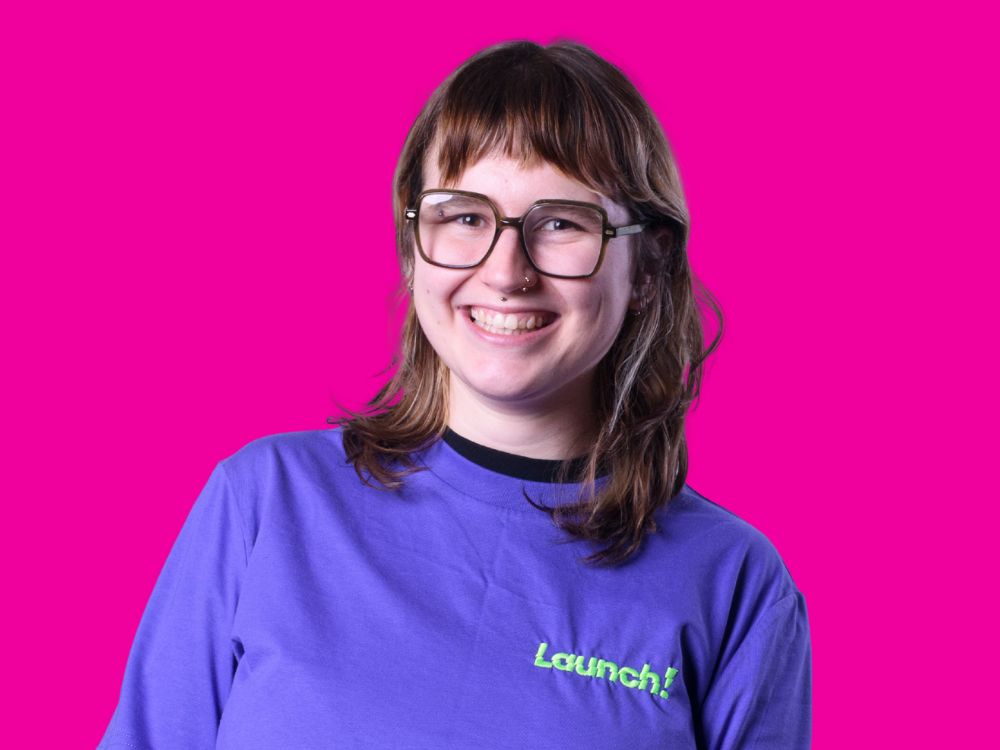
By Amy Hind, Experimentation Consultant, Launch
Back in 2022, fresh out of designing kitchens and stepping into my very first agency job (bright-eyed, bushy-tailed, and rocking a mullet), hearing that my new career path was already dying did not fill me with confidence. The narrative at industry conferences then, as it is now, was that AI was taking over and conversion rate optimisation was finished.
Four years on, experimentation is very much alive. Marketers have simply trapped it on website checkouts and lead forms.
Meanwhile, performance marketing teams across scaling DTC brands and high-volume lead generation businesses are hitting the exact same wall. Ad spend keeps climbing, traffic is flowing, but revenue or lead volume flatlines. We call this the Performance Plateau.
Google defines CRO as the systematic process of increasing the percentage of website or app visitors who complete a desired action. That definition is fine, but it holds you to an expectation that testing belongs strictly on-site.
Nothing limits testing logic to web pages. Applying structured experimentation to Meta ad creative, Google Search copy, video, and post-click landing pages transforms testing into an engine for commercial growth.
Within Launch’s Connected Performance model, full-funnel experimentation bridges two vital drivers: Creative Effectiveness and Website Conversion. Fixing friction early in the buyer journey improves top-of-funnel efficiency and protects bottom-of-funnel conversion rates.
To scale experimentation across DTC and lead generation channels, teams need a repeatable process that turns audience friction into commercial gains:
Results and Iteration: Implement winning variations immediately and record losses to inform the next hypothesis.
Catch the complete recording of our LinkedIn Live talk on catch-up:
Usability testing is frequently reserved for site navigation but testing paid ad creative reveals why users hesitate before clicking.
When testing ad assets for Icelandair, audience feedback revealed unexpected friction. Viewers assumed real landscape photographs of Iceland were CGI or AI-generated, which damaged trust.
Instead of scrapping the photos, we formed a direct hypothesis: address the audience’s scepticism head-on within the ad copy. We added explicit reassurances (“This is not AI. It’s just the Northern Lights in Iceland”) and rolled out an out-of-home video campaign featuring local residents pointing out real geysers.
Addressing customer doubt before the click delivered major commercial performance gains compared to the prior period:
This principle applies directly to lead generation. If prospective leads doubt an offer’s claim on social media or search ads, form completion rates downstream will suffer regardless of how clean your landing page looks.
Effective testing does not always require high video production budgets. Brands can extract high-converting messaging directly from data they already own:
Roughly 1 in 10 experiments yields a clear winning variation. A negative or inconclusive result is still a commercial win because it saves your wallet and prevents wasted ad spend.
In one ad experiment, we tested replacing a static product image with a feature video, hypothesising that movement would increase engagement. Click-through rates dropped from 3.03% to 2.36%. The variation lost, but running a controlled experiment saved the brand from committing its entire media budget to an underperforming creative asset.
Businesses running up to 15 structured experiments a year see up to a 30% boost in ad performance in year one compared to non-testing brands. By year two, that figure jumps to 45%.
Running tests across multiple channels generates dozens of hypotheses that quickly become difficult to manage. At Launch, we maintain a centralised Learning Library in Airtable, recording every test title, hypothesis, status, and outcome.
When a team member suggests an ad tweak, lead form alteration, or landing page change two years later, you avoid guessing. Consulting the library shows previous test results, why a variation failed, and what to try next.
Growth does not happen by accident, nor does it happen simply by ramping up your ad spend. It happens in that messy middle between the first ad impression and the checkout basket or lead submission form.
Treating experimentation as a full-funnel discipline protects acquisition margins and builds a compound competitive advantage.
To see where your business is losing growth across creative, conversion, and media structure, benchmark your marketing engine using our self-serve Seven Levers Scorecard at https://www.launchonline.co.uk/grow/
Amy Hind is a Conversion Consultant at Launch. With four years of industry experience across experimentation, user research, and performance media, she helps brands build data-driven testing frameworks that unlock performance plateaus across the entire customer funnel.
Gemini has hit 1 billion users - but beyond the numbers, what does this mean for marketing leaders? Mike Sharp…

By Elliot Smith, Account Director, Launch Your Google Ads account is facing an algorithmic shift on August 17. For years,…

By Alice-Rae Pringle, Paid Social Manager, Launch If you manage paid ads for a scaling UK ecommerce brand, you have…