How Our Connected Performance Approach is Driving Award Winning Growth for Our Clients
Launch has been shortlisted for the UK Agency Awards 2026, hot off the winning Performance Marketing Agency of the Year…

By Amy Budd, Client Services Director, Launch
You have exactly 1.7 seconds before someone scrolls past your content.
That’s the window.
The number of ads we see daily has doubled in a decade from 600 to over 1,200 and attention has officially fallen off a cliff.
We are living in an attention recession, where even Netflix is leaning into ambient media designed to be watched while you’re doing something else.
For CMOs under pressure, the temptation is to pour every penny of your performance budget into high-intent, short-term channels like search and shopping. But that logic is a trap.
This article will help make sure you don’t fall into it, including a powerful framework to ensure you can make your brand memorable to your target audience.
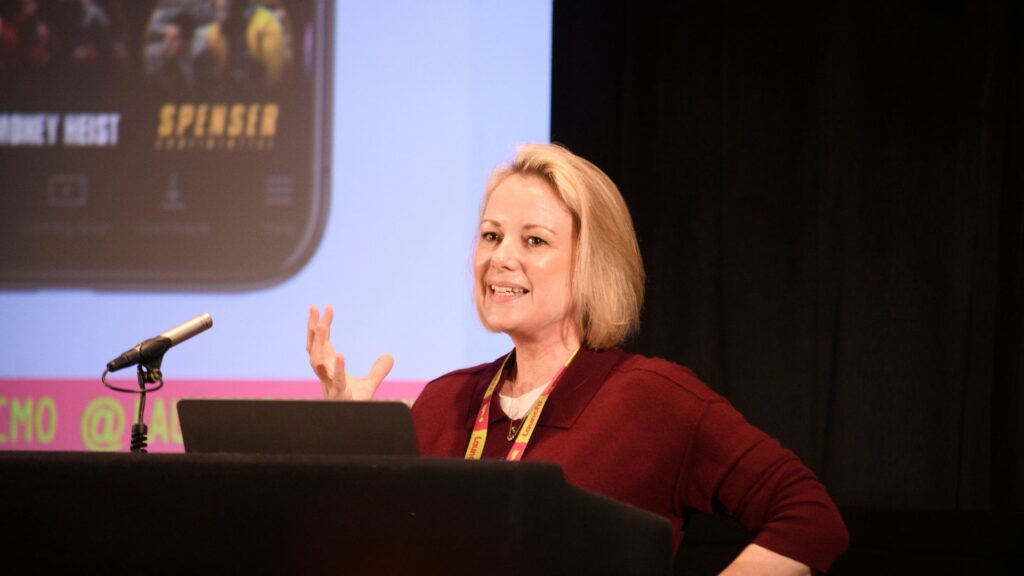
In my talk at The CMO’s Guide to Growth, I compared performance marketing to a light switch. Turn it off, and results stop.
When the market is booming, chasing the 5% of people currently in-market works. But when the market softens, you realise that what got you here won’t get you there.
To grow, you have to win the battle for the 95% of consumers who aren’t ready to buy yet.
This is where your brand comes into its own. It can be a vital shortcut to decision-making.
The human brain is only 2% of our body weight but consumes 20% of our energy; it is hardwired to look for shortcuts. Build familiarity before a customer starts their search and you’ve effectively won before the auction begins.
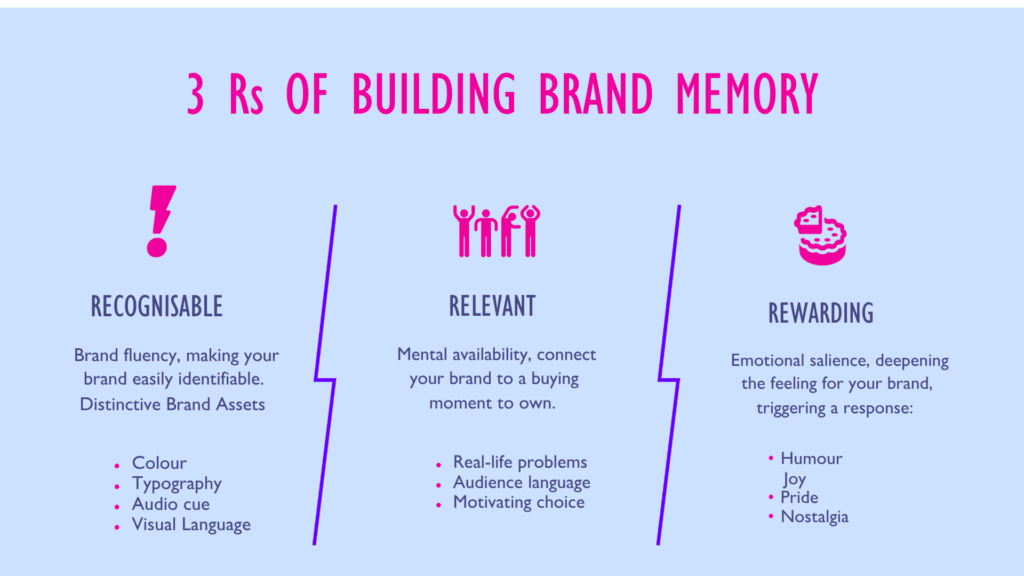
To move brands from being ignored to being remembered we use a three-part framework to audit creative effectiveness:
Are you building distinctive brand assets? Audio, for instance, can drive over twice the level of distinctiveness. You can look away from an ad, but you can’t turn your ears off. Think Jet2 and Gillette: both can vouch for the power of a good earworm.
Does the creative connect to a tangible audience need? Brands like Airbnb succeed because they focus on specific use cases, for example pet-friendly stays or group travel, rather than generic holidays.
To keep a user focused on your content for more than 1.7 seconds you must make it emotionally rewarding. Humour, joy, nostalgia – these are the touches which drive long-term memory and ultimately persuade a customer to connect with your brand.
If you only invest in performance, you are trapped in a cycle of renting your customers from Google and Meta. You pay the market rate every single time.
But when you lead with brand, building mental availability in your target audience, you change the odds. Here’s how:
In a crowded search result or social feed, familiarity is a filter. A user is significantly more likely to click an ad for a brand they recognise than one they don’t. This higher Click-Through Rate (CTR) signals to the platforms that your ad is high-quality, which in turn lowers your Cost Per Click (CPC).
You get more traffic for the same budget because you’ve already done the hard work of building trust.
Between the first trigger and the final purchase, consumers spend a lot of time exploring and evaluating. If you haven’t built a brand, you are easily swapped out for a competitor who is 10% cheaper or has a faster delivery time.
Brand memory acts as an insurance policy against price-sensitive switching.
We see this consistently: brands that invest in upper funnel awareness see a direct lift in their lower funnel conversion rates. This is because the consumer isn’t meeting you for the first time at the checkout.
Your conversion rate increases because they were sold on the product weeks ago.
You don’t need a multi-million-pound brand campaign to make your brand memorable. You need what we call a connected performance mindset, eg:
Performance marketing finds demand, but brand building creates it.
Most brands are bidding for the same 5% of customers. Be the brand that made sure the other 95% already knew their name and you’re onto a winner.
You can see me talk about brand building in more detail in my full talk on Youtube.
If your brand’s growth has flatlined you’re in the right place.
We can help diagnose what’s blocking your growth using our Seven Pillars of Growth diagnostic framework:
Give us a call if this is the kind of support your business needs.
Launch has been shortlisted for the UK Agency Awards 2026, hot off the winning Performance Marketing Agency of the Year…

Most CRO efforts fail because they are trapped at the website checkout. Discover how expanding experimentation upstream into Meta ad…

Gemini has hit 1 billion users - but beyond the numbers, what does this mean for marketing leaders? Mike Sharp…