
Launch is a Spring 2026 Clutch Global Award winner!
PPC Landing pages can make or break your ad campaign. Here's 5 simple ways to improve them and get your…

By Becky Dickinson
It seems like an obvious statement to say ‘creative is the most important part of your social advertising’.
But even now, it still amazes me how many businesses will spend hours on strategy, targeting, budget… and the creative is an afterthought.
Why is it that creative is yet to be taken seriously?
Perhaps it’s because as advertisers, we’re so driven by targeting and finding the right customers for the product, we’ve historically always laboured over these. But now, with machine learning more sophisticated than ever, it’s time to let the machine handle all that, and get creative.
And to do that well, there’s something you need to know about Meta’s approach to creative now.
Okay, so you’re ready to put more effort into creative – but do you know why some succeed while others tank? How can you put the science behind the creative, understand what works, and continuously learn?
Enter: betatyping.
Betatyping is a 4 step process to analyse your creatives in a way that allows you to continuously learn and, over time, develop creative that gets the best results.
The 4 step process consists of:
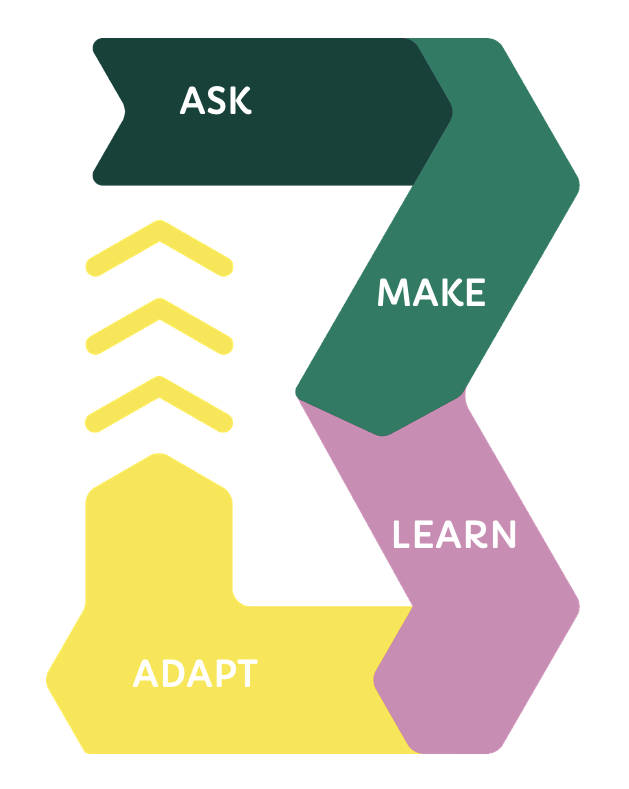
Ask
What are you trying to accomplish with your campaign? Here you want to develop a statement which includes the metric you’re going to measure and the creative variable, such as the below:
“Click through rate on the adverts will be higher if we include memorable moments in our advert rather than a standard image.”
Make
The next stage is to design the creative based on what your hypotheses is, so in this example, have a creative with memorable moments in it – an engagement, a wedding, getting a pet – versus an everyday, business-as-usual creative.
Learn
After your campaign or experiment has ended, this is the time to analyse what happened based on your hypothesis that you created. Was your hypothesis confirmed? Did the click-through rate improve by having memorable moments in the advert?
Importantly: did any secondary metrics improve too, such as purchases or bounce rate?
Adapt
Once you’ve learned what has/hasn’t worked, it’s time to develop new creative. Use the learnings to inform a new hypothesis and kick off another round of betatyping.
When you’re at the Adapt stage, think about:
Betatyping is an ongoing process, keep testing and learning – you will start uncovering ‘fertile creative territories’ and drive long-term success!
Why it’s time to embrace betatyping and go creative first
Let’s use the Meta platform as an example. When you show your ad on the Meta platform, does the highest bidder win? Nope!
The ad auction on Meta works in the following way:
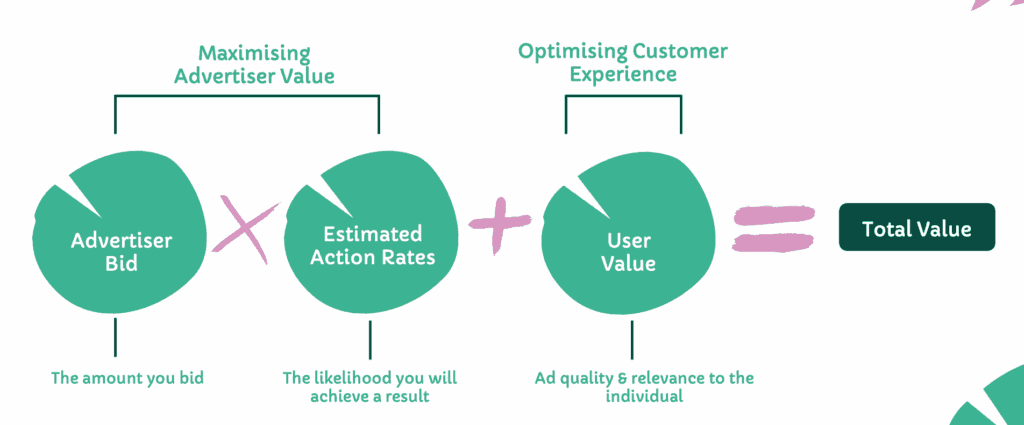
Advertiser Bid
Your bid for the event you selected as your optimisation goal.
Estimated Action Rates
Likelihood that impression shown to this person will lead to your desired result.
User Value
A measure of the creative quality of an ad as determined from many sources including ad feedback. Rhis includes people viewing or hiding the ad and assessments of low-quality attributes in the ad, such as withholding information, sensationalised language, and engagement bait.
In other words: Good creative increases the total value of an ad, while poor creative decreases it. Having good creative is extremely important for having a high performing ad on Facebook.
The winner isn’t the highest bidder but the ad that creates the most value for the user and businesses. So, when you’re working on your next social campaign, use the betatyping framework as part of your strategy, and see if you can put some science into your creative.
PPC Landing pages can make or break your ad campaign. Here's 5 simple ways to improve them and get your…

PPC Landing pages can make or break your ad campaign. Here's 5 simple ways to improve them and get your…

CMOs - learn the dos and don’ts of product feed optimisation, including software integrations and how to fit it into…