
Your Attribution Is Lying To You
Is last-click attribution lying to you? Discover Launch CEO Jaye Cowle’s 4-step measurement framework to break performance plateaus and drive…

Zero-party data involves your audience giving you explicit information, which you can then use to inform product development, service offerings and, of course, your marketing.
Now, zero-party data is not a new concept – if you’ve ever run a survey, you’re already using it – but these days there’s so much more technology and scope to more effectively use that data to provide a personalised service and experience.
The challenge is: you’ve got to know how best to go about it. What works for another brand may seem like an unnatural fit for yours, so we’ve broken down some of our favourite examples of zero-party data capture in action.
Whether it’s in the form of a pop-up on your website or within your email marketing, a survey is probably the most entry-level form of gathering explicit opinions and a great way to get started with zero-party data.
It’s vital to place the survey/feedback form at a point in the user journey where it makes sense. Post-checkout, at the end of a blog (scroll depth), after a specified amount of time on your website… you basically need enough time for your user to have formed an opinion.
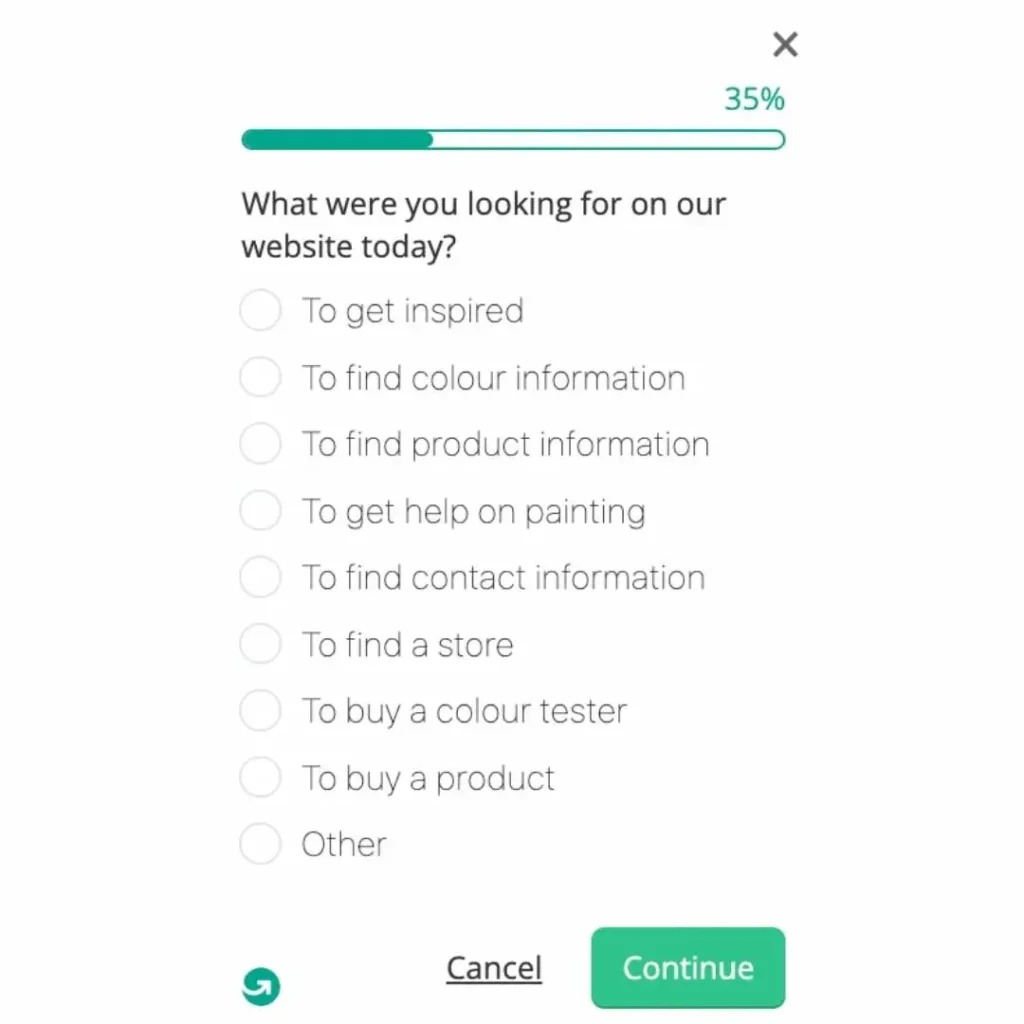
Dulux’s non-intrusive slide-in form takes up hardly any real estate on the page and asks only the essential questions. The brand can find out why audiences visit their website and whether they achieved their goal – simple, but effective. Most importantly: not annoying or disruptive.

Everyone loves a bit of interactivity, and a quiz that provides personalised recommendations at the end is a nice way to level up your approach to zero-party data.
We love Patch Plants’ recommendation tool. It’s a simple format, but beautifully branded and a wonderful example of value exchange. They get your email address and then ask quickfire questions that result in a breakdown of which plants might work for your lifestyle.
From there, Patch could decipher whether it’s mostly plant newbies or plant pros who shop with them, what they go on to buy, and whether taking the quiz results in more plants being sold.
There’ll be an element of categorising your products/services to make recommendations based on people’s answers, but we think it’s well worth the initial effort.
Interactive form tools work particularly well for extensive product offerings, and can help users bypass any potential confusion that could be a barrier to buying.
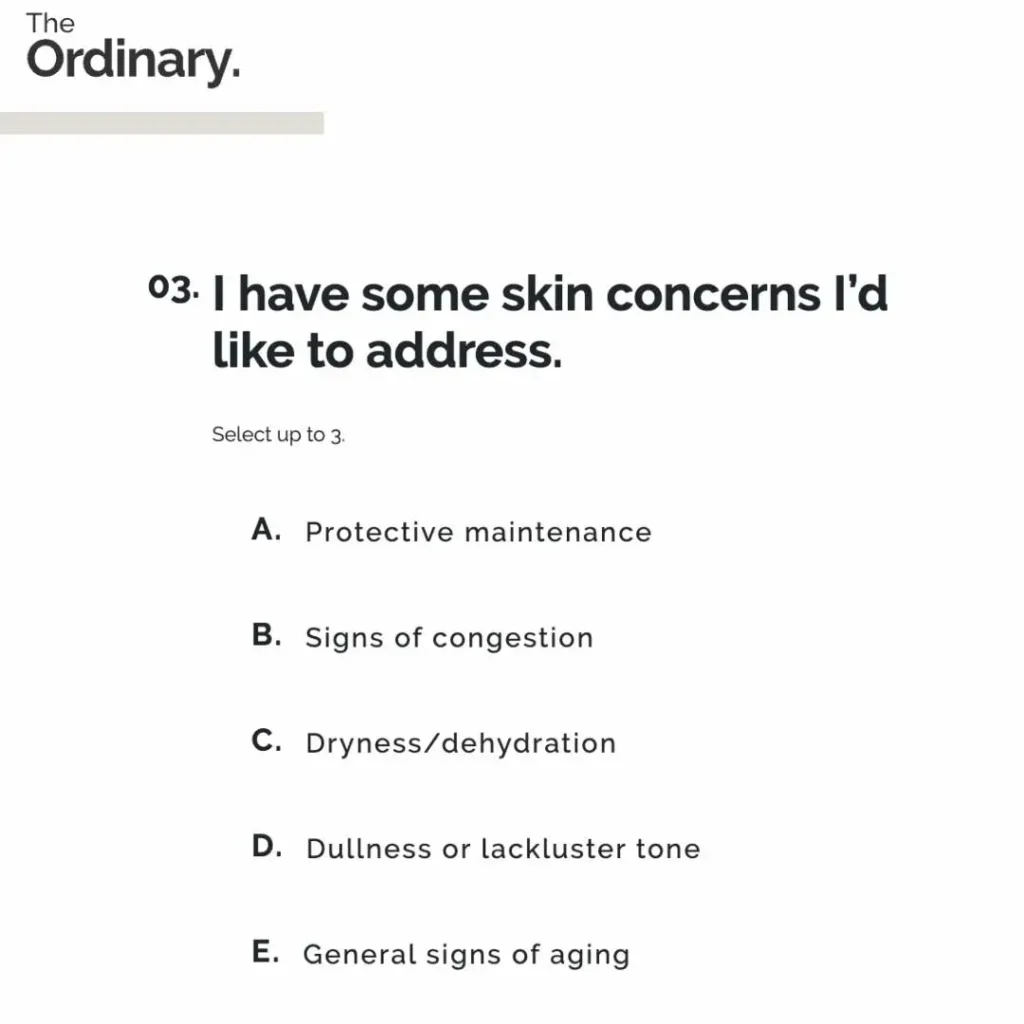
Skincare brand The Ordinary offers a ‘Build my regimen’ tool, which features one-click ‘Add to basket’ buttons at the end. Given the complexity of its brand’s product names this isn’t just a brilliant shortcut for end-users, but it also tells The Ordinary which skincare issues are most prevalent among their audience, which they can use to refine their marketing and expand their product ranges.
Not just restricted to social media platforms, profiles can be a brilliant way to keep users engaged and coming back.
For users to want to build a profile with you, you need to be offering the most in value exchange. Perhaps it’s information, a useful platform, or exclusive access. Whatever it is, people won’t register with you unless they perceive value in it.
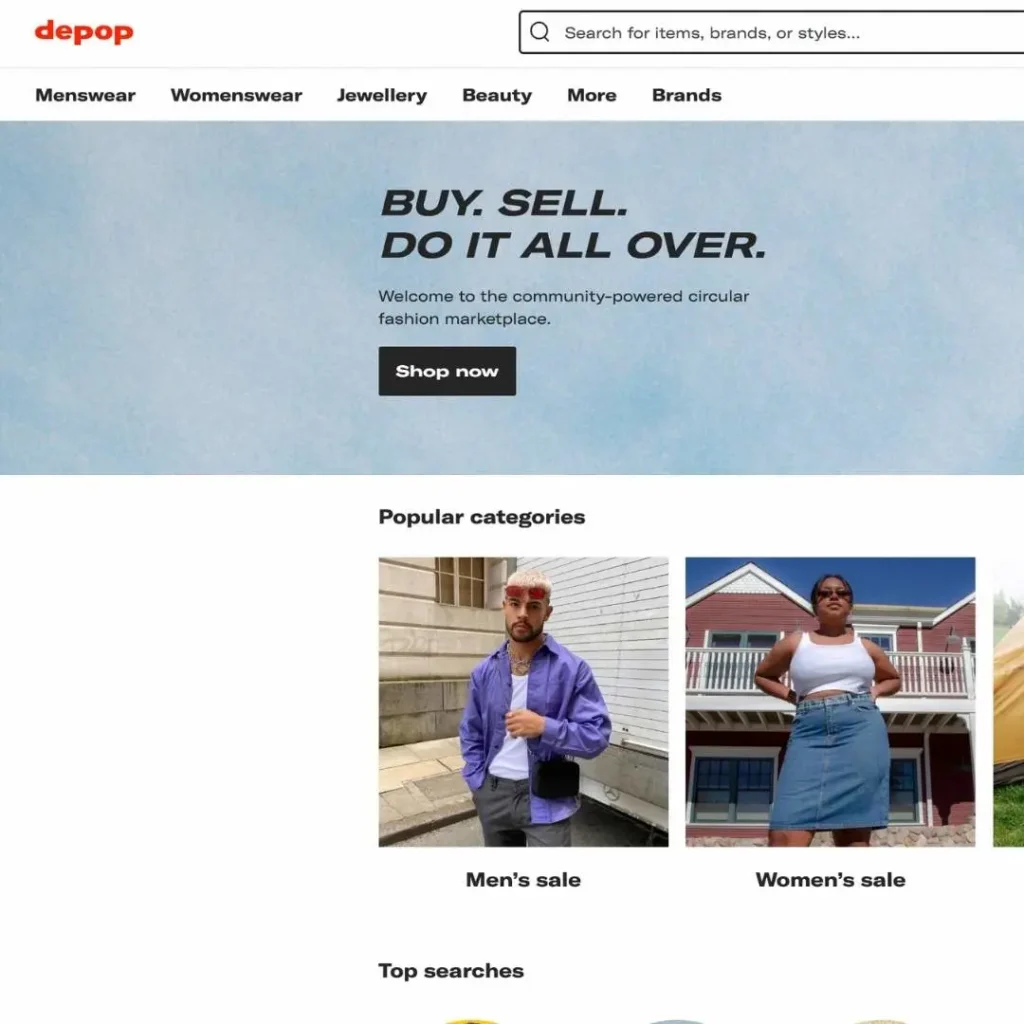
Marrying the mechanics of social with ecommerce, Depop gives users access to thousands of secondhand items. On setting up your profile, you input which brands and styles interest you, and the platform then recommends you other users selling those items.
In doing so, the platform learns which brands and categories are the most sought after, and can even push incentives to sellers by offering them discounted fees if they list items matching that description.
As data becomes more and more important to marketers – especially with budgets straining – one of the best things you can do is make sure you’re serving your target audience by using their data in ways that delight them.
Don’t just let data solve your marketing problems. Use it to provide the very best customer experience you can, and reap the rewards.
Is last-click attribution lying to you? Discover Launch CEO Jaye Cowle’s 4-step measurement framework to break performance plateaus and drive…

Discover how to test Google AI Max for Search safely. Our 3-phase framework covers query expansion, URL controls, and brand…

Traditional search is fracturing, and operating SEO and PPC in isolated silos is rapidly becoming unsustainable. Here's how Marketing leaders…