
Mystic Mike’s predictions: What does 2026 hold for paid media?
By Mike Sharp, Operations Director at Launch That time of year is here. The time when I confidently predict the…
It’s hard to think of a bigger shopping event than Black Friday. No other sales periods garner the same amount of attention, anticipation and even criticism. So, how do you stay on top of it all? Here are 7 key considerations for the shopping season.
If you’re advertising on social media this Black Friday, your creative needs to stand out, with just 1.7 seconds to engage a user on Facebook, creativity is more important than ever.
The 5 basic questions you need to ask yourself when looking at conversion focused creatives are:
If you start to test and prospect your ads during a peak period, such as Black Friday, it’s too late, costs are high and users may already have competitors in mind. You should start prospecting and testing creatives in Q3 so you can understand what works and acquire customers for a lower cost.
With more companies advertising on social media than ever before, you need to be realistic with your budgets this year. We expect to see costs rise on the platforms with fierce competition.
Secondly, if you’re trying out new channels – give them a fair chance. For example, you cannot compare meta and Pinterest if you’re investing only 20% of budget in one vs the other.
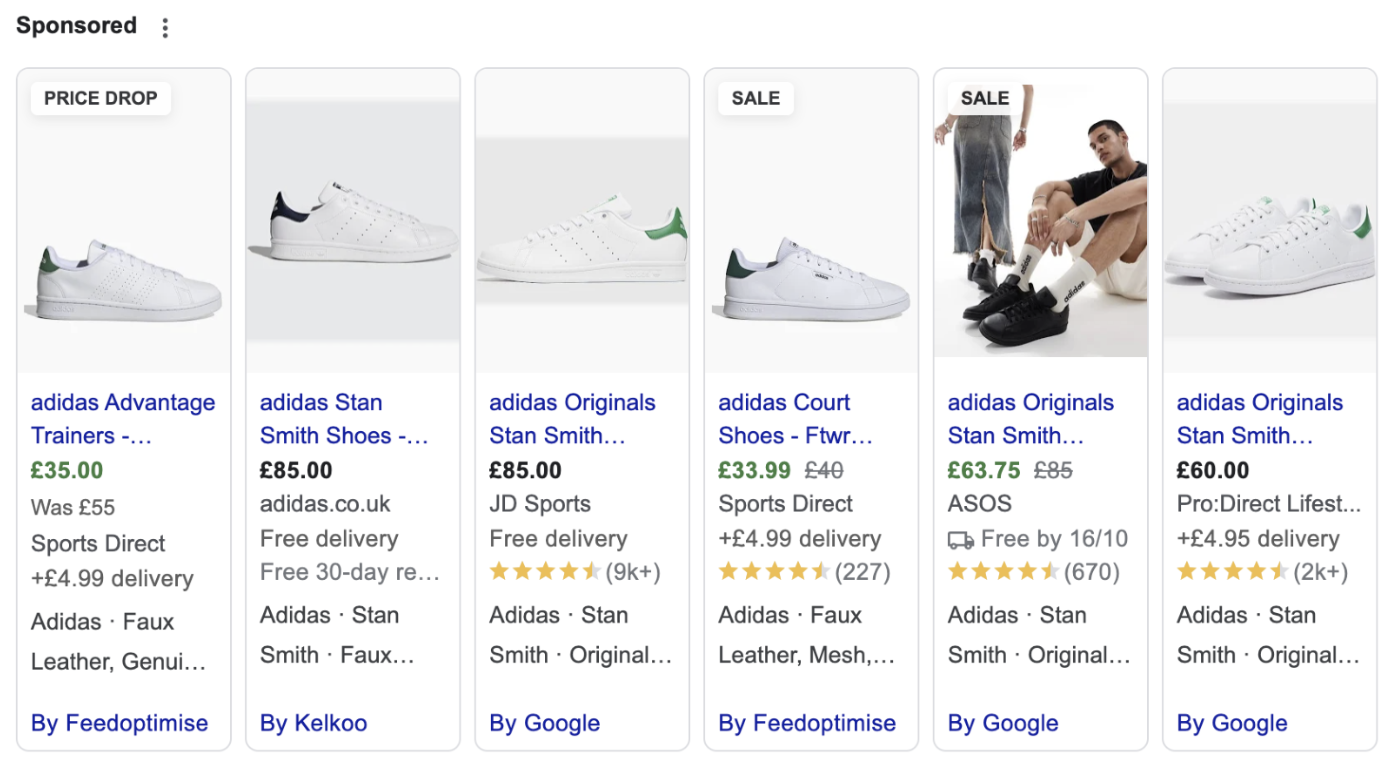
How your ads or Shopping listings are displayed can have a big impact on conversions. Make sure you’re following Google’s criteria in order to get the ‘Sale’ and ‘Price Drop’ annotations.
Site-wide codes are great, but don’t have the same visual impact as a ‘Was’, ‘Now’ listing, with new prices shown in green. That’s compounded by the fact that some retailers are doing both price drops and site-wide codes (e.g. for orders over a certain amount), which looks to be an effective way to increase conversion value with just one listing.
Remember, if you’re planning sales for the weekend, your discounts must be more than 5% to benefit from annotations in Google Shopping.
Products must be on your site at a base price for 30 days before going on sale for any discounts to be shown in Google. That’s definitely something you’ll want to bear in mind if you’re planning any January sales.
Making sure key products are visible and optimised. Testing imagery (lifestyle v product image) Title changes / coloured background instead of white.
See Google’s sales annotation requirements here.
If you’re running Black Friday deals, it’s a good idea to be upfront about exactly how. For example, are your deals time-limited? Are they only available for the day, the weekend, or the whole month? Is it site-wide, or on select items? Is it a coupon code or automatically applied?
This close to Black Friday, consumers are waiting. They don’t want to buy an item only to see it get further discounted late in the day on Friday, or even on Cyber Monday.

More than ever, finances have been front and centre in the media this year. Between the energy crisis and rising cost of living, shoppers are extremely price conscious. Headlines and TV shows are dominated by ways to save money, coupon and price-tracking websites are surging in popularity, and brands artificially inflating prices only to ‘drop’ them for Black Friday are being exposed.
And while plenty are predicting a waning interest in the shopping frenzy, we’ve seen spikes in activity and best-ever results in the accounts we manage even in the weekend prior to Black Friday. We don’t have long to wait to see how the actual weekend pans out.
Your current audience lists can be a gold mind of information to help in prospecting, re-engaging, excluding from your paid media activity.
Slice and dice the data as you want it. Are you wanting to re-engage customers who haven’t made a purchase in this year ? Exclude your recent purchasers from your current activity. Use your current purchasers for similar audiences for demand gen within Google. Give Pmax your audience signals to give it an edge.
So there you have it. For the last-minute among you, make sure you’ve got your campaigns in place to give yourself the best chance of success. We’ll be actively monitoring accounts to establish the impact of shifting consumer sentiment, and factoring this in to our activity for future high-traffic shopping periods to come.
By Mike Sharp, Operations Director at Launch That time of year is here. The time when I confidently predict the…
Exclusive insights from Meta's Manchester summit on how you can work with your agency to nail Black Friday/Cyber Monday and…

Launch has been selected to join Google's International Growth Program to help new and existing clients expand their reach.

Are you using a tailored approach to your Youtube ads? Here's what you should be doing and how to make…
By Darcy Cooke, Senior Measurement Analyst TLDR: Common GA4 Mistakes Holding You Back Stop treating GA4 like a basic reporting…

It’s time to get your calendar out and plan your marketing events for the year ahead so you can schmooze…

Is Google dead? It’s a question we get asked all the time. With ChatGPT, Perplexity, and Gemini grabbing headlines, you’d be forgiven for…